Beef Bone Broth from Scratch

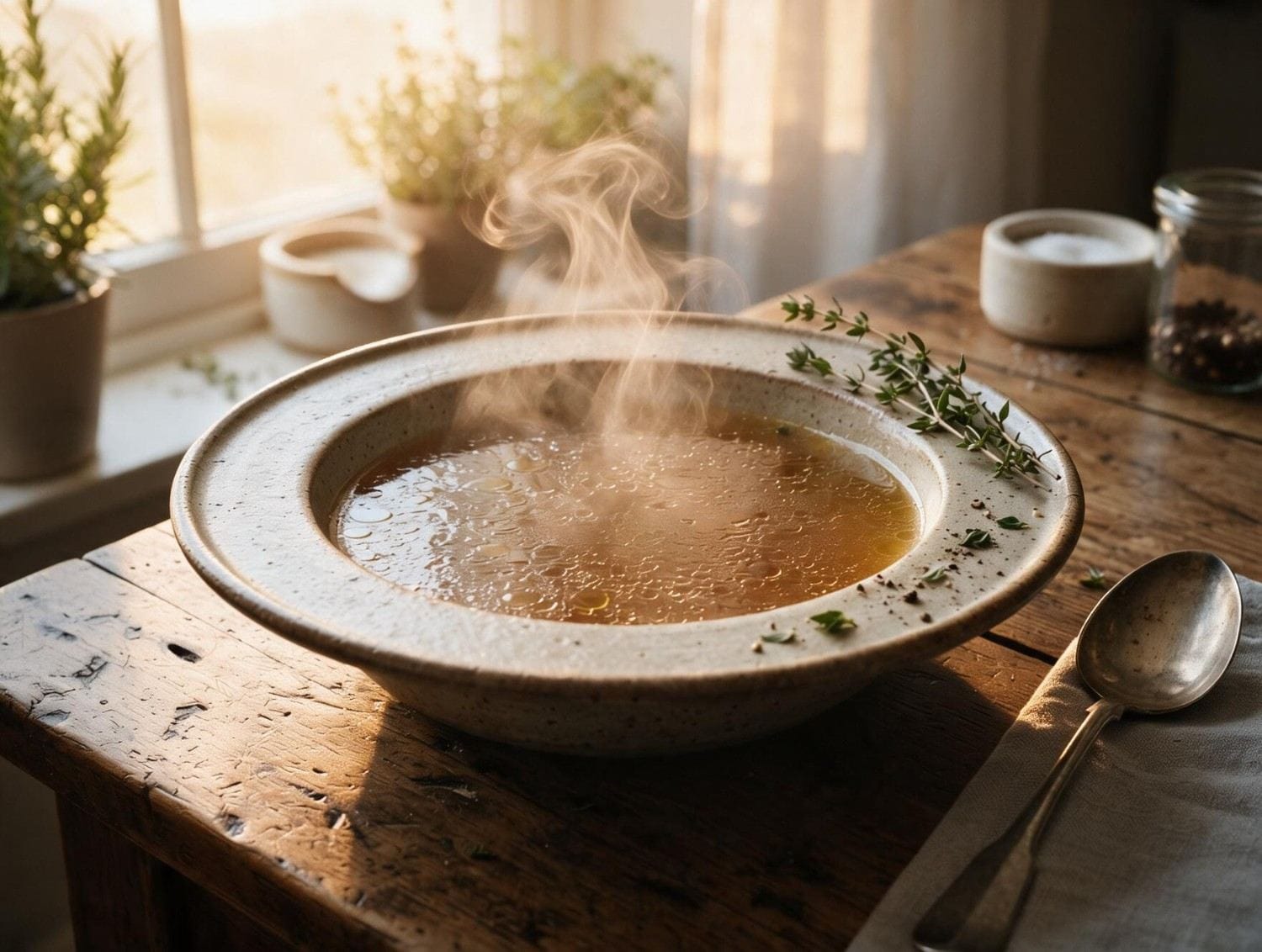
Beef bone broth is one of the simplest things you can make and one of the most useful. A pot of bones, water, and aromatics simmers for hours and produces a rich, golden liquid that elevates everything it touches. This post covers which bones to use, the full method, and how to store your beef bone broth for weeks.
Beef Bone Broth: Why It Tastes Better Homemade
Store-bought broth is thin, salty, and lacks body. Homemade beef bone broth is the opposite. Specifically, the long simmer extracts collagen from the bones and converts it into gelatin. As a result, the broth turns thick and jiggly when chilled. As a result, that gelatin is what gives it its silky texture and rich mouthfeel. Furthermore, you control the salt, the aromatics, and the cook time. No preservatives, no flavour enhancers, and no shortcuts.
Which Bones to Use
The best beef bone broth comes from a mix of bone types. First, marrow bones provide the richest gelatin. Knuckle bones add body because of their high collagen content. Specifically, neck bones and oxtail contribute both meat flavour and connective tissue. Therefore, ask your butcher for a mix of all three. At Boucherie Beirut, we carry fresh beef bones cut to size and ready for the pot.
Bones from short ribs and brisket trimmings also add depth. Moreover, saving bones from previous meals is a smart habit. Keep a freezer bag and toss in bones every time you cook a bone-in cut. When the bag is full, you have enough for a batch of beef bone broth.
Beef Bone Broth: The Full Method
Step One: Roast the Bones
Spread the bones on a sheet pan in a single layer. Roast at 425°F for 30 to 40 minutes until deeply browned. Notably, this step builds a dark, caramelized flavour base. Notably, skipping the roast produces a lighter, blander broth. The colour and depth of your broth depends on this first step.
Step Two: Build the Pot
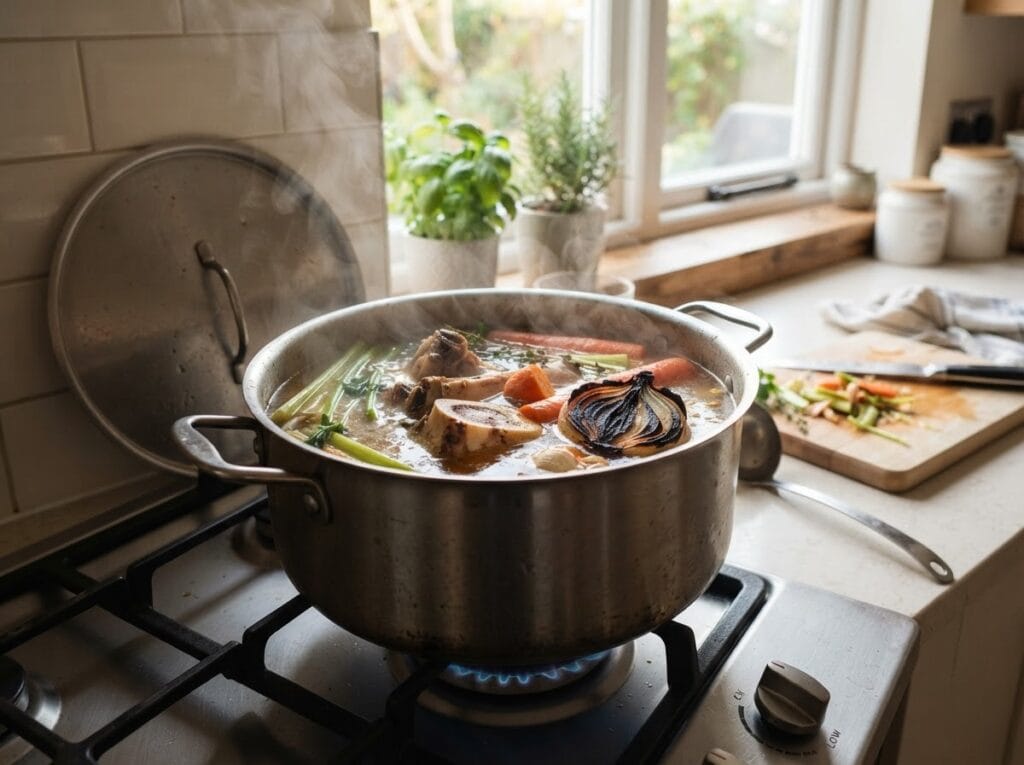
Transfer the roasted bones to a large stockpot. Add one onion (halved, skin on), two carrots (rough chop), two celery stalks, four garlic cloves, and a tablespoon of apple cider vinegar. Then fill with cold water until the bones are covered by two inches. Furthermore, the vinegar helps extract minerals from the bones. However, you will not taste it in the finished broth.
Step Three: Simmer Low and Long
First, bring to a boil, then immediately reduce to a bare simmer. Skim the foam that rises in the first 30 minutes. Consequently, removing this foam keeps the broth clear and clean-tasting. Then add a few sprigs of thyme, two bay leaves, and a teaspoon of whole peppercorns. Simmer for 12 to 24 hours. The longer you go, the richer it becomes.
Step Four: Strain and Cool
Strain your beef bone broth through a fine mesh sieve into a clean pot. Then discard the bones and spent vegetables. In addition, let the broth cool to room temperature, then refrigerate overnight. Consequently, a layer of fat solidifies on top. Simply lift it off in one piece. The fat seals the broth and keeps it fresh, so leave it on if you plan to store for more than a few days.
Stovetop vs Slow Cooker vs Instant Pot
A stovetop gives the best control and the deepest flavour for beef bone broth. Similarly, the slow cooker works well for hands-off cooking: set on low for 24 hours and walk away. Plus, an Instant Pot pressure cooker cuts the time to three to four hours. The pressure forces extraction faster. However, many cooks find that the stovetop method produces a richer, more layered result. Above all, choose the method that fits your schedule. Any of them works.
How to Use Beef Bone Broth
Use it anywhere you would use water or store-bought broth. For example, cook rice in it for extra flavour. Braise chuck roast in it for the richest pot roast you have ever tasted. Similarly, deglaze a steak pan with a splash of beef bone broth for an instant sauce. It also works as a base for soups, stews, and gravies. Hence, one batch replaces every box and can of broth in your kitchen.
Some people sip beef bone broth straight from a mug, especially in colder months. Season with a pinch of salt and a crack of pepper. Therefore, it serves as a warm, protein-rich drink between meals. The gelatin supports joint health and gut function according to many nutrition sources.
Storing Beef Bone Broth
Refrigerate in sealed jars for up to five days. Freeze in portions for up to three months. Furthermore, ice cube trays work well for small amounts you can drop into a pan as needed. Besides, freezing in one-cup portions means you always have the right amount ready without thawing the whole batch. Label every container with the date. Check safe storage practices at the Government of Canada food safety page.
Shop Bones and Cuts at Boucherie Beirut
At Boucherie Beirut in Laval, we carry fresh beef bones for broth along with bone-in cuts like short ribs, tomahawk, and brisket. Browse our full beef collection and online shop. We deliver across Greater Montreal. All products are certified and prepared fresh at our Laval shop.
Frequently Asked Questions
How long should beef bone broth simmer?
At least 12 hours for good body. Simmer up to 24 hours for the richest beef bone broth. An Instant Pot cuts this to three to four hours under pressure.
Do I need to roast the bones first?
Yes. Roasting at 425°F for 30 to 40 minutes builds the deep colour and caramelized flavour that separates real beef bone broth from a pale, weak stock.
Can I reuse bones for a second batch?
You can, but the second batch will be lighter. The first extraction pulls most of the collagen and flavour. Use the second batch for cooking rice or as a light soup base rather than as standalone beef bone broth.