Wagyu Price: What You Pay and Why

The wagyu vs regular beef debate comes up every time someone sees the price tag. Wagyu beef costs several times more per pound. The wagyu price raises one question: whether that premium delivers enough of a difference to justify the cost. This post compares both side by side across marbling, flavour, texture, cooking, and value so you can make your own call.
Wagyu Price: What Creates the Difference
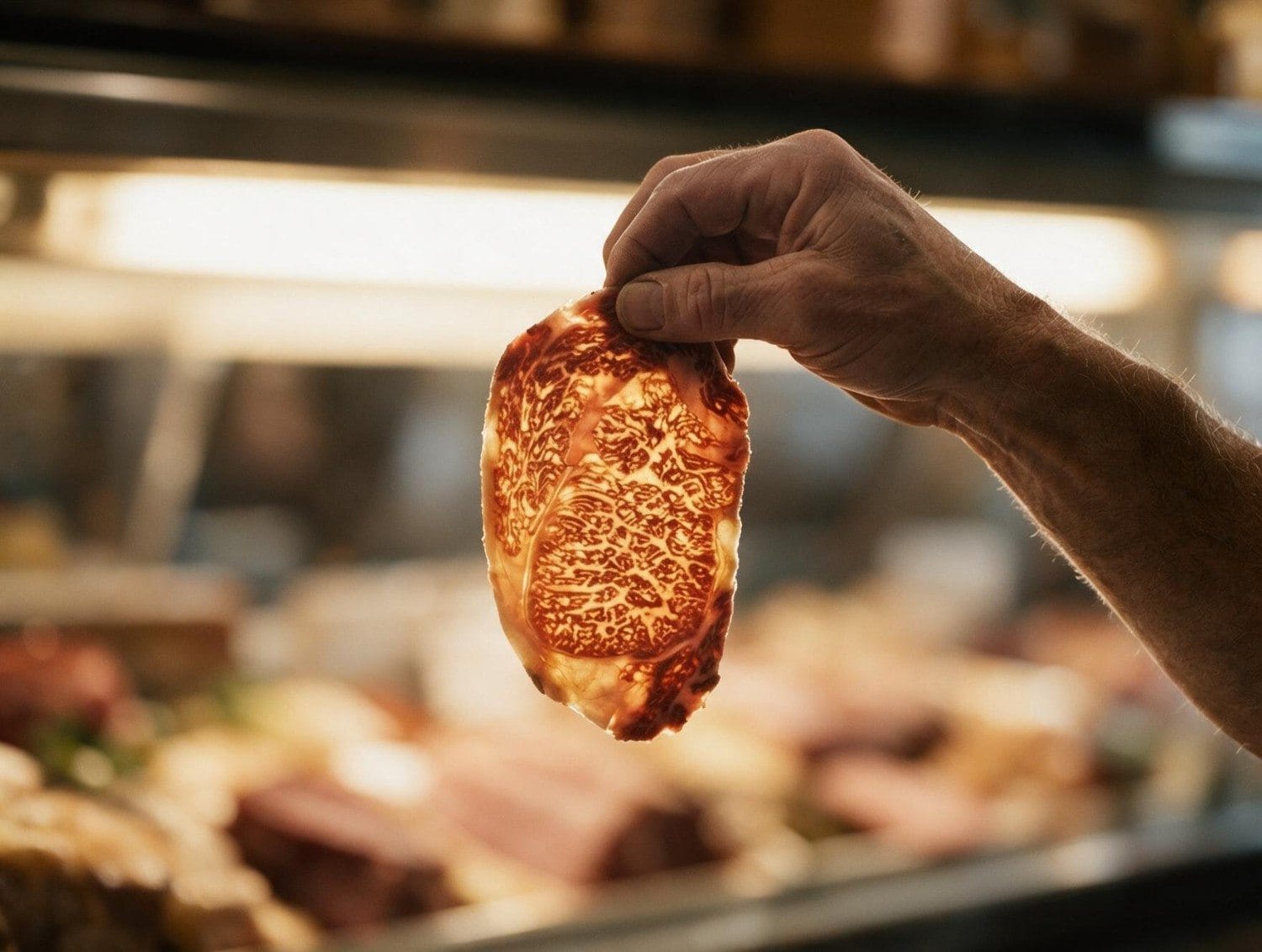
The difference starts with genetics. Wagyu beef comes from cattle bred for intramuscular fat. Specifically, the fat grows between the muscle fibres instead of around them. In contrast, regular beef cattle produce marbling too, but not at the same density. As a result, wagyu beef can score a 9 or higher on the marble score scale, while even top-grade AAA Canadian beef rarely exceeds a 4 or 5. Ultimately, that fat is what changes everything about the eating experience.
Wagyu Price Starts with Marbling
Pick up a Fullblood Wagyu 9+ and a regular ribeye side by side. Immediately, the wagyu looks almost white with fat threaded through every fibre. Furthermore, the regular ribeye has visible marbling, but large sections of lean meat sit between the fat lines. Marbling is where the gap is widest and most obvious.
What the Wagyu Price Gets You in Flavour
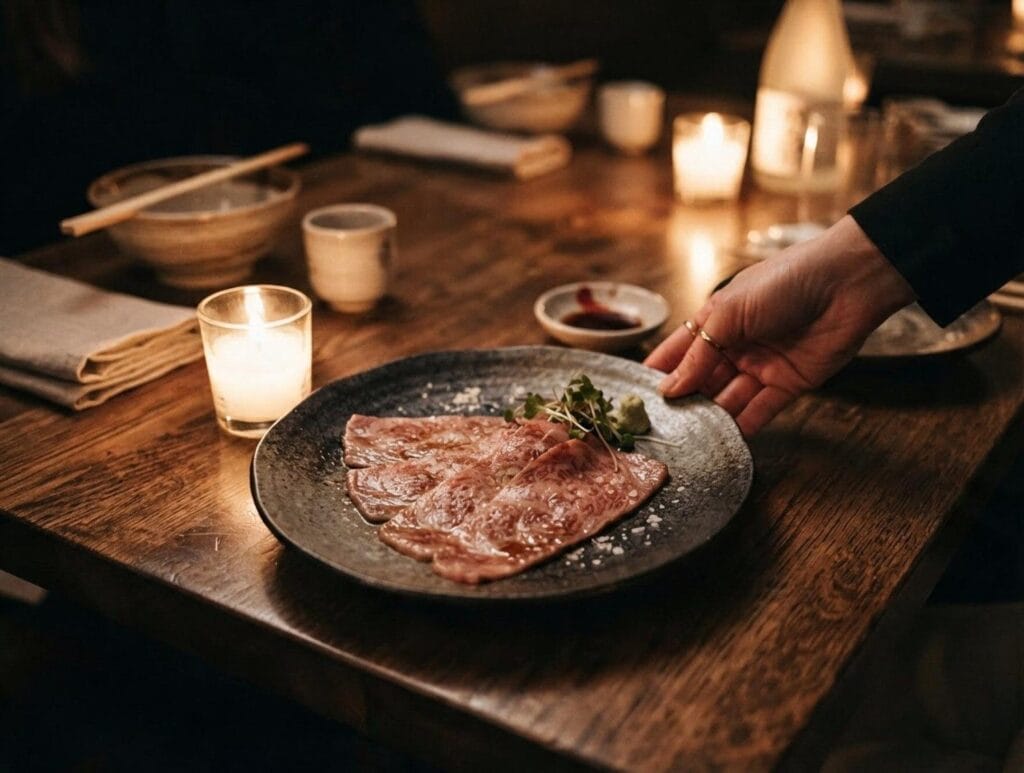
Wagyu delivers a buttery, almost sweet richness that coats your entire palate. Specifically, the fat melts at a lower temperature than regular beef fat. Consequently, it dissolves on contact and floods every bite with flavour. In contrast, regular beef tastes beefy, mineral, and clean. It has depth, but the flavour profile is leaner and more straightforward.
Neither flavour is better in absolute terms. However, wagyu flavour is more intense, and lingers longer and lingers longer. Above all, the difference is not subtle. Anyone tasting wagyu beside regular beef identifies it instantly. It is a fundamentally different eating experience.
Texture at the Wagyu Price Level
At the wagyu price point, what you get is a steak that melts. Simply, there is no other word for it. The intramuscular fat renders so quickly that the steak feels like it dissolves on your tongue. Moreover, even well-done wagyu stays tender because the fat prevents the fibres from tightening completely. Regular beef has more chew and structure. In contrast, a properly cooked ribeye or bavette delivers satisfying resistance when you bite down.
Some steak lovers actually prefer the bite of regular beef. Notably, the chew gives you more time to taste the meat. Wagyu passes through so fast that the experience is intense but brief. Hence, the texture question is a matter of personal preference, not quality.
Wagyu Price and How to Cook It Right
At this wagyu price, the steak needs a lighter touch. The high fat content means it renders quickly and can go from perfect to overcooked in seconds. Then sear on high heat for 60 to 90 seconds per side. Then rest immediately. Furthermore, no oven finish needed. Specifically, wagyu tastes best at rare to medium-rare. Anything past medium loses the melt-in-your-mouth quality you paid for.
Regular beef is more forgiving. A tomahawk handles a long reverse sear. A filet mignon takes a butter baste. Plus, thick cuts tolerate the oven and the grill without the same risk of overcooking. Compared to the wagyu price tier, regular beef gives you more room for error.
Wagyu Price per Portion: Less Is More
The wagyu price per kilo is high, but a full 250-gram steak is too rich for most people. The fat content is so high that four to six ounces per person is plenty. Similarly, slicing a single steak thin and sharing it across the table is a common approach at restaurants. You get the full experience without the heaviness.
Regular beef serves at standard portions. A 200 to 250 gram ribeye or bavette per person is a full meal. Therefore, in the wagyu price equation, the smaller wagyu portions offset some of the price difference. You buy less per person even though the per-kilo price is higher.
Wagyu Price Per Serving: The Real Math
The wagyu price runs three to five times more per kilogram than Certified Angus or AAA beef. Still, that is the reality. However, the per-serving cost gap is smaller than it looks. A 120-gram wagyu portion costs roughly the same as a 250-gram premium ribeye. In addition, wagyu turns a home dinner into an event. As a result, you skip the restaurant markup entirely. A wagyu dinner for two at home costs less than one person’s bill at a high-end steakhouse.
When the Wagyu Price Is Worth It
Save wagyu beef for moments that deserve it. Anniversaries, milestones, a birthday dinner, or a night where you want the meal to be the memory. Browse our wagyu collection for the full selection. As a result, it becomes a treat rather than a habit, and every time you have it, the experience feels special.
When to Skip the Wagyu Price
Regular beef covers every other occasion. Weeknight steaks, BBQs, family dinners, and meal prep all call for quality Certified Angus or AAA beef. Besides, premium regular beef from a real butcher already outperforms anything at the grocery store. You do not need wagyu to eat incredibly well. The wagyu price choice is about occasion, not about one being inferior to the other.
Cook to safe temperatures for both. Check the chart at the Government of Canada food safety page.
Shop Both at Boucherie Beirut
At Boucherie Beirut in Laval, we carry the full wagyu price range. Browse our wagyu collection, Certified Angus range, and full beef collection. Visit our online shop for delivery across Greater Montreal. All beef is certified and prepared fresh at our Laval shop.
Frequently Asked Questions
Is wagyu really that much better than regular beef?
Different, not better. Wagyu delivers a buttery, melt-in-your-mouth experience. Regular beef delivers a classic, beefy bite. The wagyu price depends on the occasion and your personal taste.
How much wagyu per person?
Four to six ounces. The wagyu price per serving stays reasonable because the rich fat makes smaller portions satisfying. Slice thin and share for the best experience.
Can I cook wagyu the same way as regular beef?
No. The wagyu price pays for beef that needs higher heat, shorter time, and lower doneness. Sear 60 to 90 seconds per side and serve rare to medium-rare. Regular beef handles longer cooks and higher internal temperatures.