Beef Stew: A Butcher’s Brew

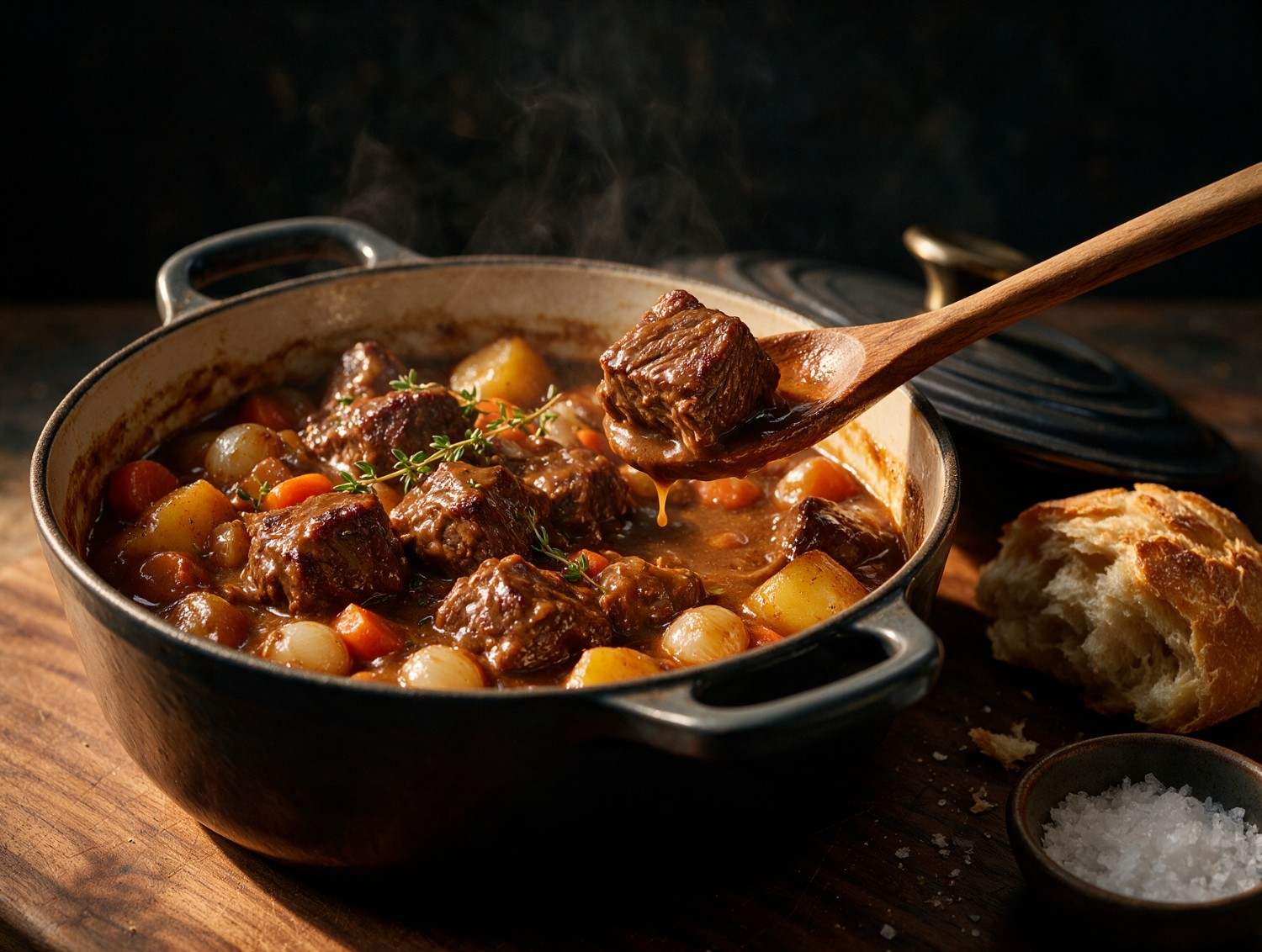
Great beef stew starts at the butcher counter, not at the stove. Specifically, the cut you choose decides whether the stew turns out silky and rich or tough and dry. This post covers the best cuts for beef stew, why they work, how long each one needs, and what to ask your butcher before you start cooking.
Why the Cut Matters More Than the Recipe
Every beef stew recipe online tells you to brown the meat and simmer for hours. However, few explain why some beef stew comes out tender and some stays chewy. Specifically, the answer is collagen. Cuts with lots of connective tissue break down during a long simmer and release gelatin. As a result, the liquid thickens, the meat softens, and every spoonful coats your mouth. In contrast, lean cuts without connective tissue do the opposite. They tighten, dry out, and no amount of simmering fixes them.
Best Cut for Beef Stew: Chuck
Chuck roast is the gold standard for beef stew. Notably, it comes from the shoulder, which works hard during the animal’s life. Furthermore, all that movement builds layers of connective tissue and fat that melt during a long braise. Then cut chuck into two-inch cubes for the best texture. Smaller pieces fall apart. Larger ones take too long to cook through. Moreover, chuck delivers a rich, beefy flavour that stands up to bold seasonings and root vegetables.
Ask your butcher to cut a chuck roast into stew cubes for you. The pieces will be uniform, which means even cooking. Plus, buying a whole roast and having it cubed costs less per kilo than pre-cut stewing beef from the grocery store.
Beef Stew with Short Ribs
Short ribs bring bone and marbling into the pot. Specifically, the bone adds body to the liquid while the marbling keeps the meat moist through the entire cook. Consequently, beef stew made with short ribs has a deeper, more layered flavour than chuck alone. Therefore, leave the bone in during cooking and remove it before serving. In addition, the gelatin that melts off the bone turns the stew liquid into something closer to a sauce than a broth.
Beef Stew with Brisket
Brisket is an unconventional choice for beef stew, but it works beautifully. Notably, the flat section is leaner, while the point is fattier. Use a mix of both for the best balance. Specifically, brisket fibres separate into tender strands during braising rather than cubing like chuck. Hence, the texture is different: stringy and pull-apart rather than chunky. This makes brisket beef stew ideal for serving over mashed potatoes or polenta where the shredded meat drapes across the plate.
Cuts to Avoid in Beef Stew
Not every cut belongs in the pot. Ribeye, filet mignon, and other premium steaks are designed for fast, high-heat cooking. Notably, simmering them for hours wastes their tenderness and natural flavour. These cuts are already tender. They do not need the low and slow treatment that makes beef stew work. Save them for the grill or the pan. Similarly, pre-cut stewing beef from the supermarket often comes from mixed trim with inconsistent fat content. The result is uneven cooking and unpredictable texture.
How to Brown for Better Beef Stew
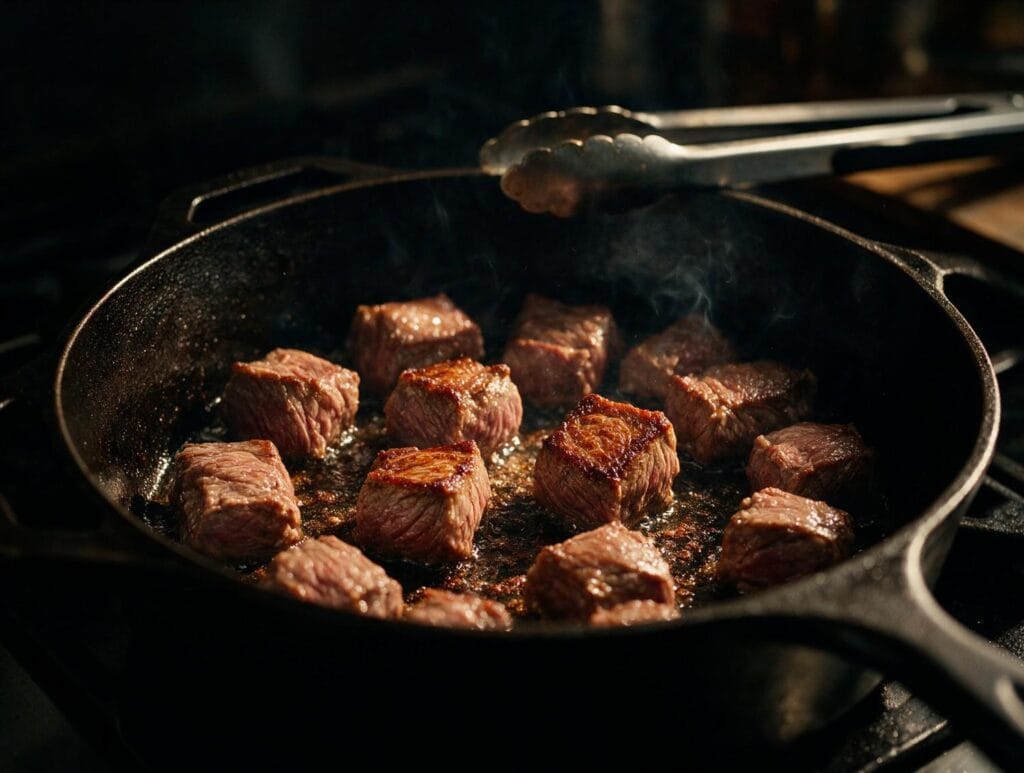
Browning builds the flavour foundation. First, pat the cubes dry with paper towels. Then season with salt and pepper. Then heat oil in a heavy pot until it shimmers. Simply sear the cubes in small batches without crowding the pot. Above all, do not move them for three minutes per side. The dark crust that forms on each cube carries into the stew liquid and deepens the colour and taste of the finished dish.
Furthermore, after browning deglaze the pot with a splash of broth, wine substitute, or water. Scrape the brown bits from the bottom. Those bits are called fond, and they contain concentrated flavour that makes beef stew taste like it simmered all day even in the first hour.
Beef Stew: How Long to Simmer
Chuck cubes need two to three hours at a gentle simmer. Short ribs need three to four hours because the bone slows heat penetration. Brisket needs three to four hours for the fibres to fully separate. Furthermore, the liquid should barely bubble. A hard boil toughens the outside of the meat before the inside has time to soften. Keep the lid slightly cracked so steam can escape and the liquid reduces into a thicker, richer consistency.
Use a meat thermometer. The internal temperature should reach 195°F to 205°F. At that range, collagen converts fully to gelatin and the beef stew reaches maximum tenderness. Check safe temperatures at the Government of Canada food safety page.
Building Flavour Around the Meat
Onions, carrots, celery, and garlic go in after browning. Cook them for five minutes to soften. Then add tomato paste and stir for two minutes. The paste caramelizes and adds a savoury depth that ties the whole dish together. As a result, the vegetables and the meat share a unified flavour base.
Add potatoes in the last 45 minutes so they hold their shape. Similarly, root vegetables like turnip and parsnip add sweetness. Therefore, season at the end rather than the beginning. The liquid reduces as it simmers, which concentrates the salt. A stew that tastes perfect at hour one may taste too salty by hour three.
Shop Stew Cuts at Boucherie Beirut
At Boucherie Beirut in Laval, we cut every piece for beef stew fresh. Browse our beef collection including chuck roast, short ribs, and brisket. Visit our online shop for delivery across Greater Montreal. All beef is certified and prepared fresh at our Laval shop. Tell us you are making stew and we will cube it to the right size.
Frequently Asked Questions
What is the best cut for beef stew?
Chuck roast. The shoulder muscle has the right balance of meat, fat, and connective tissue. It breaks down into tender cubes over two to three hours and delivers deep, beefy flavour in every pot.
Can I use steak for beef stew?
No. Premium steaks like ribeye and filet mignon are already tender. Simmering them for hours dries them out. Beef stew needs tough cuts with collagen that melts during the long cook.
How do I keep beef stew from being tough?
Use the right cut (chuck, short ribs, or brisket), simmer gently instead of boiling, and cook until the internal temperature reaches 195°F to 205°F. Patience and low heat are what make beef stew tender.