
Sujuk: The Spicy Beef Sausage Guide

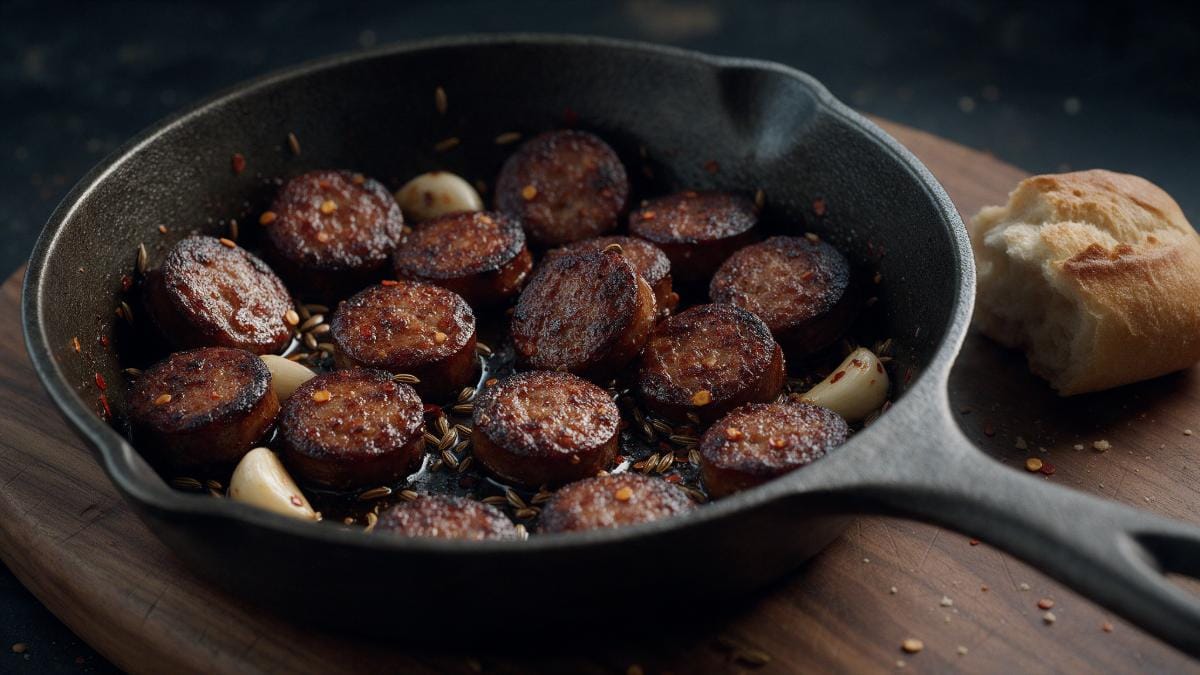
Sujuk is the bold, garlicky beef sausage that turns a simple breakfast into a feast. A little heat, plenty of cumin and a lot of garlic make it impossible to forget. You may also see it spelled sucuk, soudjouk or sojok, which is the name on our label. Our butchers in Laval make our sojok fresh, so here is how to cook it and enjoy it at its best.
What Is Sujuk?
Sujuk is a spicy sausage made mostly with ground beef and fat, seasoned with garlic, cumin and red pepper. It is loved across Turkey, Armenia, the Balkans and the Middle East. Traditional sujuk is dried and fermented, which gives it a firm texture and a deep flavour. Even so, it is usually cooked before eating, often sliced and fried until crisp at the edges.
Our Fresh Sojok Beef Sausage
Our sojok beef sausage is a fresh version, made by hand in our Laval shop. It is a bold, garlicky halal beef sausage seasoned with cumin, paprika and Middle Eastern spices. Each pack weighs about 600 g. Because it is fresh rather than dried, it must always be cooked through before eating.
How to Cook Sujuk
First, slice the sausage into rounds about as thick as a coin, or cut the links in half lengthwise. Next, heat a heavy pan over medium heat with a little oil. Then add the slices and cook them, turning the pieces, until they are browned on both sides and the fat starts to sizzle. Finally, check the thickest piece with a thermometer. Beef sausages are safe at 71 C (160 F), according to Health Canada.
On the barbecue, grill whole links over medium heat, turning them often until they are browned all over and reach 71 C inside. Medium heat matters, because the spiced fat can flare up over high flames.
Sujuk and Eggs, the Classic Breakfast
Sujuk and eggs is one of the most loved ways to eat this sausage, especially in Turkey, where it is called sucuklu yumurta. Brown the slices in a pan, then push them to the edges. Crack the eggs into the centre and season them with a pinch of cumin, chili flakes, salt and pepper. Cook until the whites are firm and the yolks are still soft. Serve it right in the pan with crusty bread, sliced tomato and cucumber.

More Ways to Enjoy Sujuk
Sujuk is wonderfully versatile. For a quick sandwich, tuck pan fried slices into a warm pita with tomato, pickles and garlic sauce. You can also add the slices to a homemade pizza, stir them into an omelette, or toss them with roasted potatoes for an easy dinner. They also bring bold flavour to a pot of beans or a tomato and pepper stew.
Sujuk vs Makanek
If you love sujuk, try its little cousin. Our makanek beef sausage is a Lebanese-style small sausage seasoned with warm spices for a savoury, slightly tangy flavour. Sujuk is the bolder, more garlicky of the two. For a full overview of our range, read our halal beef sausages guide.
Storing Fresh Sujuk
Keep it in the coldest part of your fridge and cook it soon after you buy it. If you plan to wait, freeze it in its sealed pack and thaw it in the fridge the day before cooking. Cooked leftovers should go in the fridge and be reheated until they reach 74 C (165 F).
Order Sojok Beef Sausage Online
Our butchers make our sojok fresh in Laval, and you can add it to your order in our online shop. We deliver across Laval, Montreal, the North Shore and the South Shore, and orders of $300 or more ship free. See exactly where we deliver on our halal meat delivery page, or browse all our beef sausages.
Frequently Asked Questions
What is sujuk made of?
Sujuk is a spicy beef sausage seasoned with garlic, cumin and red pepper. Our sojok is a fresh halal beef sausage with garlic, cumin, paprika and Middle Eastern spices.
Do you need to cook sujuk?
Our sojok is fresh, so it must be cooked until it reaches 71 C (160 F) in the centre, the safe minimum for beef sausages according to Health Canada.
How do you eat sujuk?
Slice it and pan fry it until browned, then serve it with eggs, in a warm pita with tomato and pickles, or grill whole links on the barbecue.