Steak Mistakes Everyone Makes

Even experienced cooks make steak mistakes that cost them flavour, texture, and money. Fortunately, the good news is that every common mistake has a simple fix. This guide covers the errors we see most often and exactly how to correct each one.
Steak Mistakes: Cooking It Straight from the Fridge
This is one of the most common steak mistakes. A cold steak cooks unevenly. The outside overcooks before the centre warms up. As a result, you get a grey band of well-done meat around a cold middle. The fix is simple. Take the steak out 30 to 45 minutes before cooking. Specifically, room-temperature beef sears faster, cooks more evenly, and finishes with edge-to-edge colour. This single step improves every steak you cook.
Not Drying the Surface
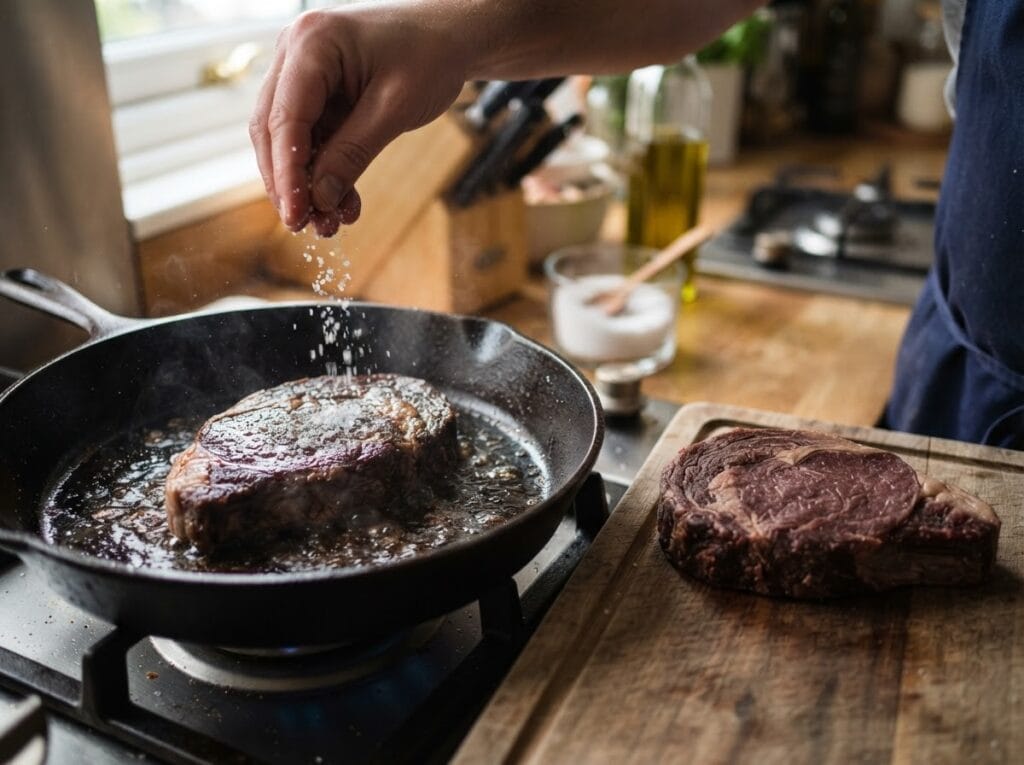
Among steak mistakes, this one is silent. Moisture is the enemy of a good sear. A wet surface steams instead of browning. Consequently, the crust never develops and the steak looks pale and flat. Instead, pat the steak dry on all sides with paper towels right before it hits the pan. Furthermore, season after drying so the salt sticks to the surface. As a result, a dry steak in a hot pan creates the deep, golden crust that makes people think you trained in a restaurant.
Steak Mistakes: Using the Wrong Pan
This ranks high on the steak mistakes list. Non-stick pans cannot reach the temperatures needed for a proper sear. They cap out around 500°F, which is not enough. Cast iron is the right tool. Specifically, it holds heat evenly, reaches extreme temperatures, and builds a better crust than any other surface. Moreover, cast iron improves with use. Every steak you cook in it seasons the pan further. In short, if you own one pan for steak, make it cast iron.
Not Getting the Pan Hot Enough
Of all steak mistakes, this is the easiest to fix. A lukewarm pan gives a lukewarm result. The steak should sizzle the instant it touches the surface. First, heat the pan for three to five minutes on high before adding oil. Then wait for the oil to shimmer. Then place the steak down and do not touch it for three minutes. Above all, resist the urge to move it. The crust forms only when the meat stays in full contact with the hot surface.
Steak Mistakes: Choosing the Wrong Cut
Not every cut suits every method. A filet mignon needs a quick sear and gentle finish because it has almost no fat. A ribeye handles high heat because the marbling protects it from drying out. Similarly, bavette loves a screaming hot grill but turns tough if cooked past medium. Match the cut to the method and you avoid half the steak mistakes on this list.
Thick cuts like tomahawk benefit from the reverse sear, while thinner steaks like Denver steak work better with a straight pan sear. Plus, talk to your butcher about what you plan to cook. A good butcher cuts the steak to the right thickness for your method.
Seasoning Too Late
This is a steak mistakes classic. Sprinkling salt right before cooking only flavours the surface. Instead, the fix is seasoning 45 minutes ahead. The salt draws out moisture, which dissolves the salt, then gets reabsorbed into the meat. Hence, the flavour reaches deeper into every fibre. Simply use coarse kosher salt and freshly cracked pepper. Nothing else. Premium beef from a butcher does not need a spice rub to taste incredible.
Steak Mistakes: Flipping Too Often
Many steak mistakes involve impatience. Every flip interrupts the crust. The steak needs unbroken contact with the hot surface to build colour and texture. Flip once. Then sear for three minutes on the first side. Then flip and sear for two to three minutes on the second. Notably, the first side always develops a better crust because the pan is hottest on the first contact. Therefore, serve that side facing up on the plate.
Skipping the Rest
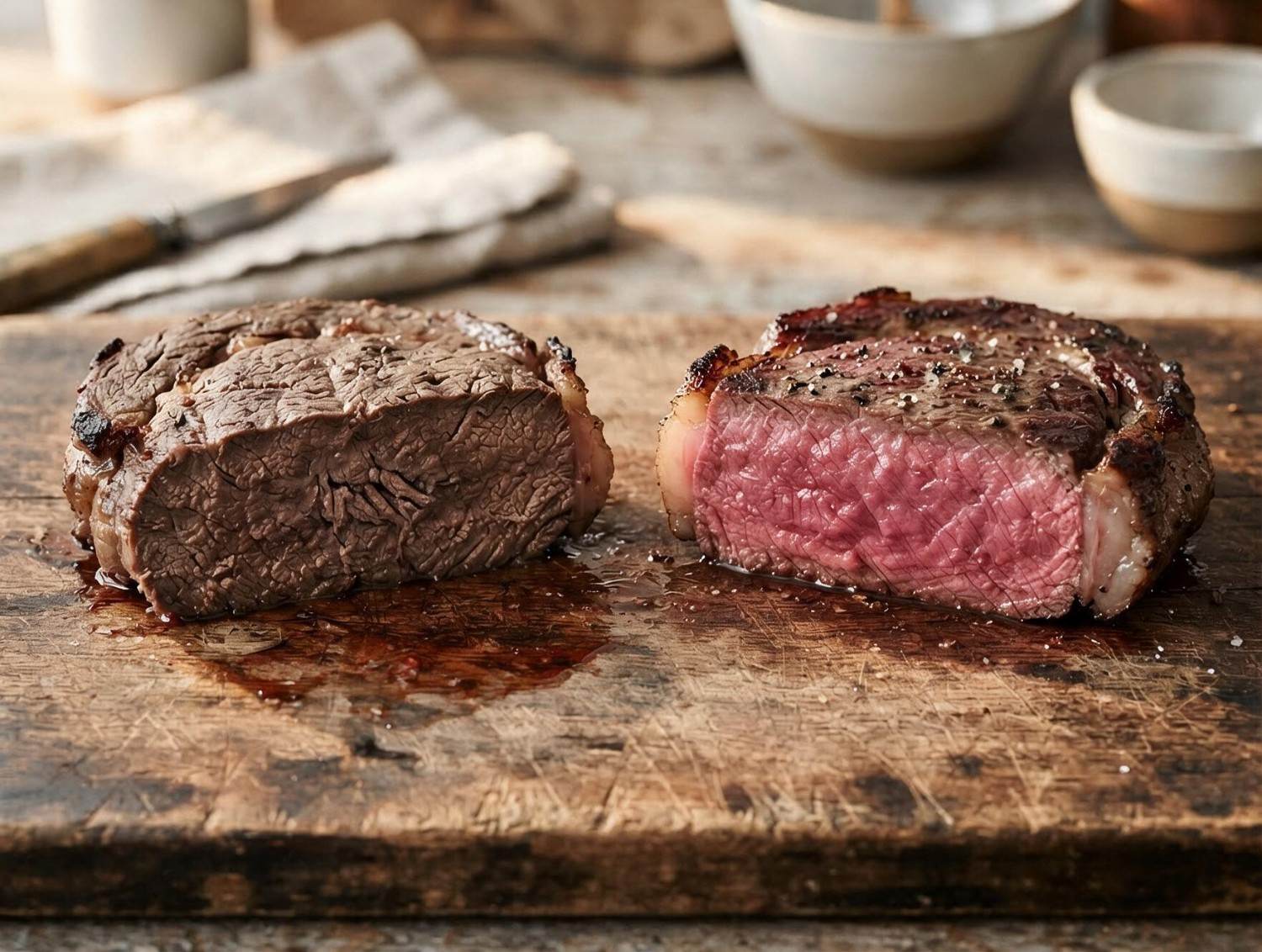
Skipping the rest is one of the steak mistakes that costs the most juice. Cutting into a steak immediately lets all the juices pour onto the cutting board. The muscle fibres are still contracted from the heat. However, resting for five minutes lets those fibres relax and reabsorb the liquid. As a result, the steak stays juicier on the plate instead of creating a puddle underneath. Therefore, rest every steak — no exceptions. Tent it loosely with foil if you worry about it cooling down.
Overcooking: The Costliest of All Steak Mistakes
Of all steak mistakes, overcooking is the most expensive. A premium steak cooked to well-done loses the tenderness and flavour you paid for. Medium-rare to medium is the sweet spot for most cuts. Use a meat thermometer instead of guessing. Pull at 125°F for medium-rare, 135°F for medium. In addition, check safe temperatures at the Government of Canada food safety page. A thermometer costs less than one overcooked wagyu steak — and it saves every steak after that.
Shop Premium Steaks at Boucherie Beirut
Avoid these steak mistakes and great steak starts with great beef. At Boucherie Beirut in Laval, every cut comes hand-selected and trimmed by our butchers. Browse our Certified Angus range, wagyu collection, and full beef collection. Visit our online shop for delivery across Greater Montreal. All our beef is certified and prepared fresh at our Laval shop.
Frequently Asked Questions
What is the biggest of the steak mistakes?
Not letting the steak rest. It is the steak mistakes fix with the biggest impact. Five minutes of resting keeps the juices inside the meat instead of on the cutting board. It is the easiest fix with the biggest impact.
Should I oil the steak or the pan?
Oil the pan. Many steak mistakes come from oiling the steak instead. A thin layer of avocado oil or clarified butter in a screaming hot cast iron pan gives the best sear. Oiling the steak wastes oil and creates smoke.
How do I know when my steak is done?
Use a meat thermometer to avoid steak mistakes with doneness. Pull at 125°F for medium-rare or 135°F for medium. The touch test is unreliable, especially for thick cuts where the margin for error is small.