
Beef Roast: Low Effort, Big Flavour

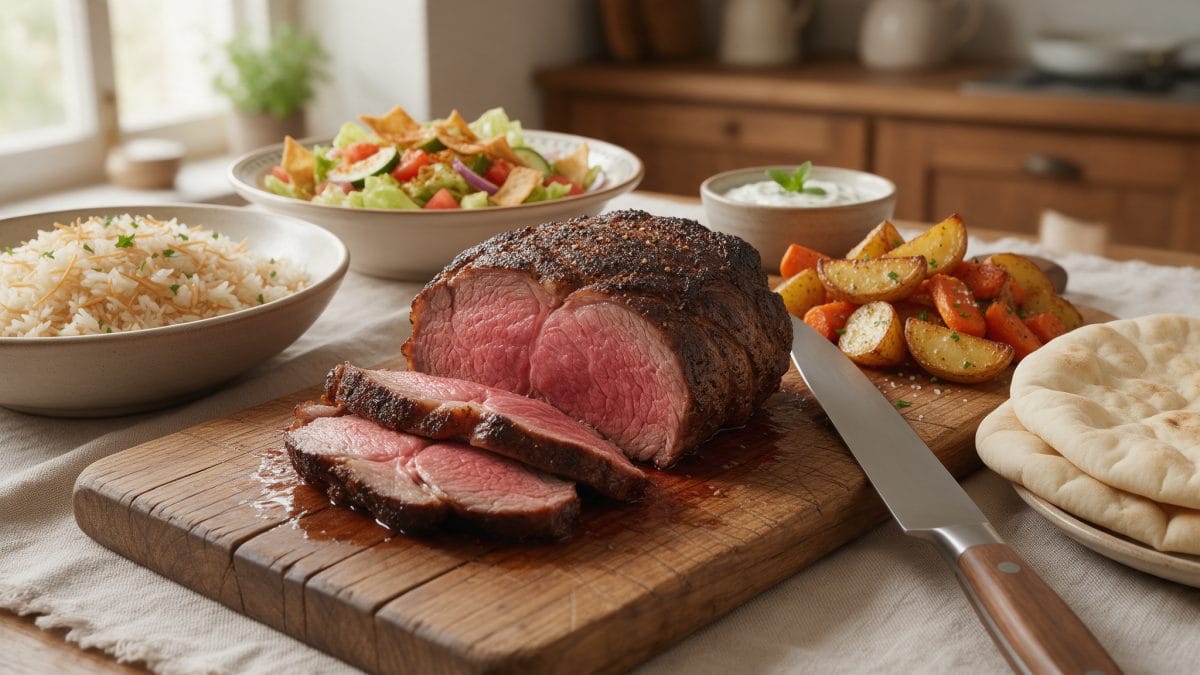
A beef roast is the dish our customers come back for when the whole family is coming over. One well-chosen cut, a little salt and garlic, and a few hours in the oven give you a centrepiece that feeds everyone. In this post, our butchers in Laval share which cuts roast best, how to cook each one, and the small habits that keep every slice juicy.
Why a Beef Roast Never Goes Out of Style
In many Lebanese homes, the Sunday lunch is the meal everyone looks forward to all week. A beef roast fits that tradition perfectly, because it cooks quietly while you prepare the rice, the salad and the garlic sauce. Ten minutes of prep is usually all it asks. After that, the oven does the work, so you can spend the afternoon with your guests instead of standing at the stove. It also scales easily, which means the same method works for six people or for a full Eid gathering.
Picking the Right Cut for Your Beef Roast
The cut decides everything else: the oven temperature, the cooking time and how you slice it at the end. Tough, hard-working muscles need low heat and patience, while tender cuts need high heat and a short cook. That is why we always ask customers at the counter how they plan to serve it before we recommend a piece. Here are the three cuts we suggest most often for a beef roast.
Chuck Roast: The Family Favourite
Chuck roast comes off the shoulder, so it carries generous marbling and plenty of connective tissue. Cooked low and slow, that tissue melts and the meat becomes fork tender. It is the most forgiving choice for a first beef roast, and the leftovers shred beautifully for wraps the next day.
Brisket: Rich and Sliceable
Brisket is famous on the smoker, but it roasts just as well in a home oven. Covered and cooked gently, this beef roast turns rich and juicy, with slices that hold together on the plate. Ask our team to leave a thin layer of fat on top, since that fat bastes the meat as it cooks.
Chateaubriand: For the Big Occasions
When the dinner matters, chateaubriand is the cut people remember. This thick centre piece of the tenderloin makes a soft, mild and elegant beef roast, and it cooks in under 30 minutes. For step-by-step details, read our chateaubriand guide.
How to Season a Beef Roast
Good beef does not need much. Rub the beef roast all over with coarse salt, black pepper and crushed garlic at least one hour before cooking, or the night before if you have time. The salt first draws moisture to the surface and then sinks back in, so the meat is seasoned all the way through. For a Lebanese touch, add a pinch of seven spice to the rub.
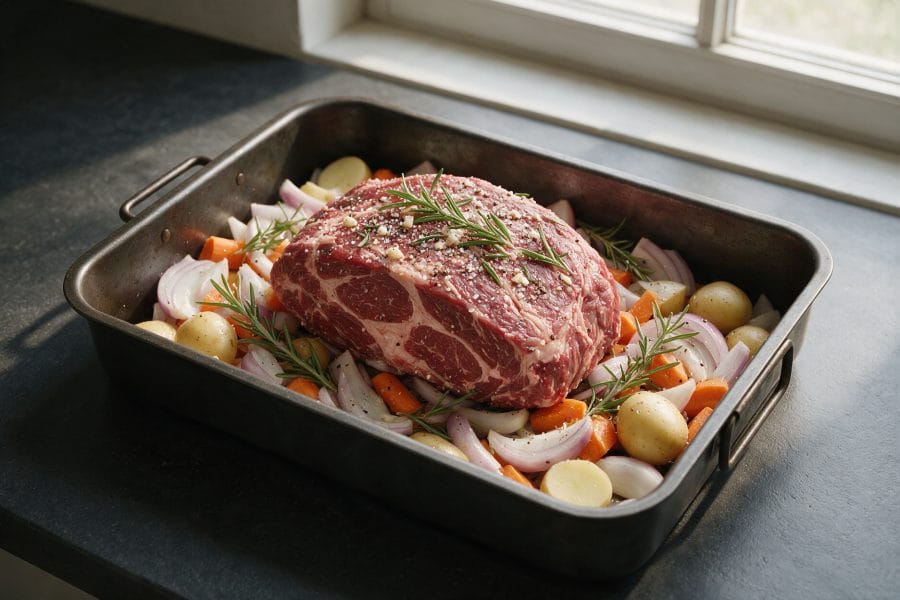
Next, lay the meat on a bed of sliced onions, carrots and potatoes. The vegetables lift the roast so heat circulates underneath, and they soak up the juices as they cook. In other words, your side dish is ready when the meat is.
Oven Times and Temperatures
Every beef roast follows a simple rule. A chuck roast goes in covered at 300 F for three to four hours, until a fork slides in easily. Brisket roasts covered at 300 F for four to five hours, then rests in its juices. Chateaubriand gets a hard sear in a hot pan first, then 20 to 25 minutes at 425 F.
A meat thermometer takes the guesswork out. Health Canada recommends at least 63 C (145 F) for medium-rare whole cuts, and the temperature keeps climbing a few degrees while the meat rests. So for chateaubriand, pull it around 140 F and let the rest carry it the final step. For the full chart, see the Health Canada safe cooking temperatures page.
Rest Before You Carve
This is the step most people rush, and it makes the biggest difference. Cover the beef roast loosely with foil and give it 15 to 30 minutes before you slice. During that time the juices settle back into the meat. Otherwise, they run onto the cutting board and the slices dry out. Meanwhile, you have time to finish the rice and make the gravy.
A Quick Gravy with the Pan Juices
The juices left in the roasting pan carry all the flavour of the beef roast. Put the pan over medium heat and stir in a spoonful of flour for about two minutes. Then whisk in a cup of beef broth until it thickens, and season with salt and pepper. Strain it for a smooth finish, or leave the onions in for a rustic one.
What to Serve with It
Our customers love a beef roast with vermicelli rice, roasted potatoes and a bright fattoush to cut the richness. Garlic sauce and warm pita on the side never last long. If you prefer something lighter, a green salad with lemon and olive oil works just as well.
Leftover Beef Roast Ideas
A good beef roast always makes a second meal. Thin slices make quick sandwiches with pickles and garlic sauce, and diced pieces turn into a breakfast hash with eggs and potatoes. Shredded chuck is also perfect in rice bowls. Keep leftovers in a sealed container in the fridge for up to four days, and reheat them to 74 C (165 F).
Order Your Roast Fresh in Laval
At Boucherie Beirut, every roast is hand-trimmed at our Laval counter, and our team is happy to suggest the right beef roast for your guest list. Browse our full beef collection, or read our guide to the best cuts for slow cooking for more ideas. We deliver across Laval, Montreal, the North Shore and the South Shore, so you can order online and have your roast at the door.
Frequently Asked Questions
What is the best cut for a beef roast?
For a first beef roast, chuck is the easiest and most forgiving. Brisket gives rich, juicy slices, and chateaubriand is the premium choice for special dinners.
How long does roasting take in the oven?
A chuck beef roast takes three to four hours at 300 F, and brisket takes four to five hours. Chateaubriand needs only 20 to 25 minutes at 425 F after searing.
How do I keep a beef roast juicy?
Match the cut to the method, check the beef roast with a meat thermometer, and rest the meat for 15 to 30 minutes before slicing. Cooking tough cuts covered also keeps the moisture in.