Smoking Beef: Where to Start

Smoking beef at home sounds intimidating, but the process is simpler than most people think. You need a smoker or a kettle grill, the right cut, good wood, and patience. This guide covers everything a beginner needs to start smoking beef with confidence.
Smoking Beef: Why Low and Slow Works
Smoking beef uses low heat and wood smoke over several hours. Specifically, the temperature stays between 225°F and 275°F the entire cook. As a result, tough connective tissue breaks down into gelatin without drying out the meat. Furthermore, the smoke penetrates the surface and creates a flavour bark that no oven or grill can replicate. In short, this combination of time, heat, and smoke is what makes smoking beef so rewarding.
Best Cuts for Smoking Beef
Brisket
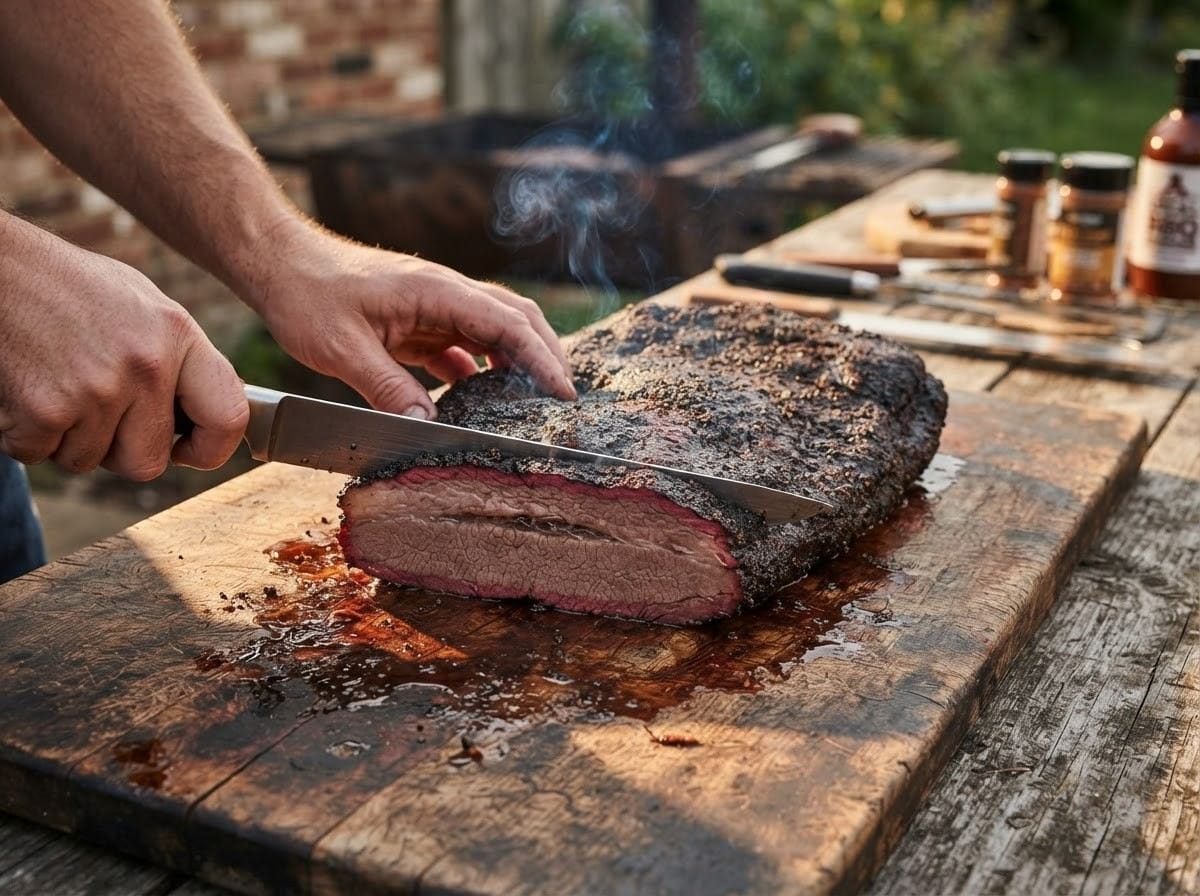
Brisket is the king of smoking beef. Notably, the flat and point sections cook differently, so keep the fat cap up to protect the leaner flat. Specifically, smoke at 250°F for one hour per pound. The internal temperature should reach 195°F to 203°F before you pull it. Then wrap in butcher paper and rest for at least 30 minutes. Read our full brisket guide for detailed instructions.
Short Ribs
Short ribs are the most forgiving cut for smoking beef beginners. As a result, the bone keeps the meat moist, and the heavy marbling prevents drying out. Moreover, they finish in four to five hours compared to 10 or more for brisket. Smoke at 250°F until the bone pulls away from the meat. Check our short ribs guide for smoking, braising, and grilling methods.
Beef Sausages
Beef sausages take the least time when smoking beef. Simply place them on the cool side of the smoker for 60 to 90 minutes at 250°F. The casing absorbs smoke quickly and develops a dark, flavourful skin. Notably, smoked sausages make a great appetizer while the main cut finishes its long cook.
Chuck Roast
Chuck roast smoked for five to six hours produces pulled beef that rivals any barbecue restaurant. Furthermore, the shoulder muscle is loaded with collagen that melts into the meat during the long cook. Consequently, the result shreds easily and soaks up sauce. Serve the pulled beef on buns with coleslaw for a simple, satisfying meal.
Smoking Beef: Choosing the Right Wood
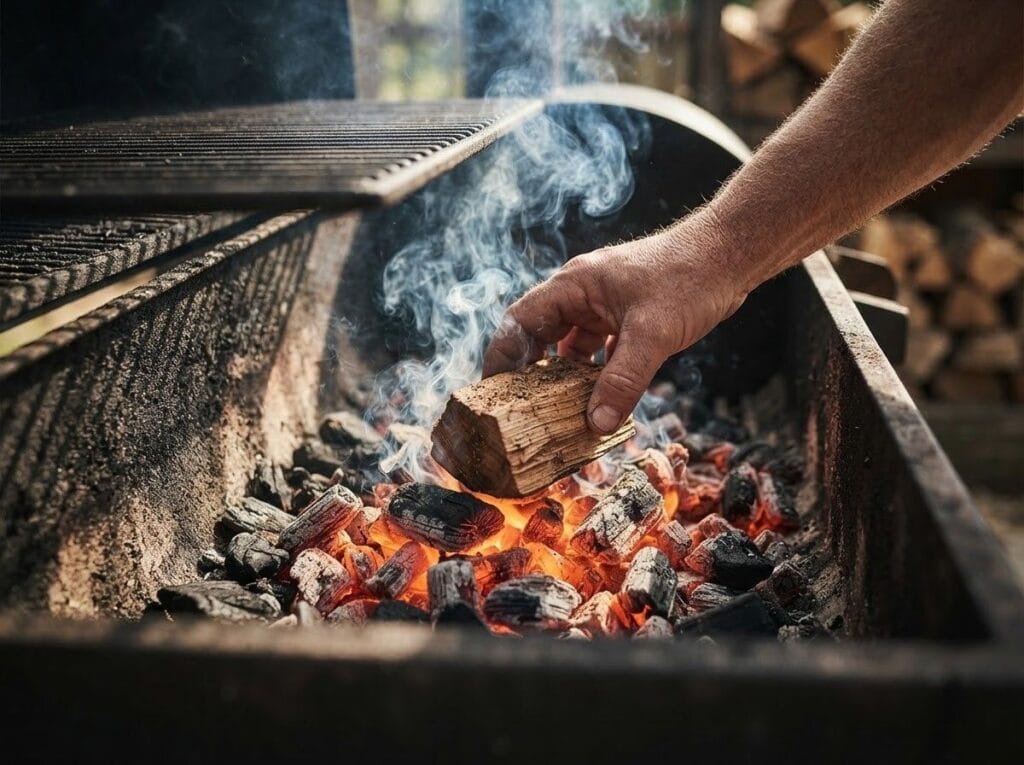
When smoking beef, the wood you use shapes the flavour of the finished meat. Hickory delivers a strong, classic smoke taste. Specifically, it pairs well with brisket and chuck roast. However, too much hickory can turn bitter after several hours. Instead, oak is milder and burns consistently. It works with every cut and is the safest choice for beginners who are just starting to smoke beef.
Cherry and apple wood add a subtle sweetness that complements beef without overpowering it. Plus, cherry gives the bark a darker, reddish colour that looks impressive on the plate. Therefore, avoid mesquite for long cooks because it turns harsh. Mesquite works for quick smokes on sausages, but not for a 10-hour brisket. Above all, use chunks rather than chips. Chunks smoulder slowly and produce steady smoke for hours.
Setting Up Your Smoker
For smoking beef, a dedicated smoker gives the best results, but a standard kettle grill works for beginners. First, set up indirect heat by placing coals on one side and the meat on the other. Add two to three wood chunks directly on the coals. Then close the lid and adjust the vents to hold 250°F. Then check the temperature every 30 minutes and add coals as needed.
The key to smoking beef is steady temperature. After all, big swings dry out the meat and extend the cook time. Hence, resist the urge to open the lid. Every peek drops the temperature by 10 to 15 degrees and adds minutes to the total cook. Use a leave-in probe thermometer so you can monitor without opening. As a result, the smoker stays stable and the meat cooks evenly.
The Stall: What It Is and How to Handle It
Around 150°F to 170°F, the internal temperature stops rising during smoking beef. This is called the stall. In fact, moisture evaporating from the surface cools the meat at the same rate the smoker heats it. Specifically, the stall can last two to four hours on a brisket. It is the moment that tests every beginner’s patience when smoking beef.
You have two options. First, wait it out and let the smoker do its work. The temperature eventually pushes through. Alternatively, wrap the meat tightly in butcher paper. Therefore, the wrap traps moisture, breaks the stall faster, and keeps the bark intact. Foil also works but softens the bark more than paper does. Either way, the stall is normal and not a sign that anything went wrong.
Resting: The Step Nobody Skips
Resting is essential when smoking beef. The long cook pushes moisture to the centre of the meat. In addition, resting for 30 to 60 minutes lets that moisture redistribute evenly through every fibre. Wrap the smoked meat in butcher paper, then in a towel, and place it in a cooler. It stays hot for hours. Cutting too early lets the juices pour out and leaves the meat dry despite all those hours of careful smoking.
Check safe internal temperatures at the Government of Canada food safety page.
Shop Smoking Cuts at Boucherie Beirut
At Boucherie Beirut in Laval, we carry every cut for smoking beef at home. Browse our beef collection, sausage selection, and online shop. All products are certified and hand-trimmed fresh at our Laval shop. We deliver across Greater Montreal. Your first smoking beef session starts with one order.
Frequently Asked Questions
What is the easiest cut for smoking beef?
Short ribs. They finish in four to five hours, stay moist thanks to the bone and marbling, and forgive temperature swings. This is the best starting point for anyone new to smoking beef.
What temperature should I smoke beef at?
Between 225°F and 275°F. This is the standard range for smoking beef. Most pitmasters target 250°F as the sweet spot. Steady temperature matters more than the exact number. Avoid spikes above 300°F.
How long does smoking beef take?
Smoking beef times depend on the cut. Sausages take 60 to 90 minutes. Short ribs take four to five hours. Chuck roast takes five to six hours. Brisket takes 10 to 14 hours depending on size.